The 2025 reveal proved that basic tools are no longer sufficient for high-trust environments. Here is a breakdown of the three primary methods used by professionals to maintain true digital IP mask.
1. Residential and Mobile Proxies
Traditional datacenter proxies are effectively "blacklisted" by advanced social media algorithms. Because they originate from known server ranges, they carry a high "fraud score."
Professional marketers instead utilize Residential Proxies. These are IP addresses assigned by ISPs to actual homeowners. To a platform like X, a request coming from a residential proxy is indistinguishable from a legitimate local user.
For the most sensitive tasks, 4G/5G Mobile Proxies are the gold standard. These use IPs from mobile carrier towers. Due to the way CGNAT allows thousands of legitimate users to share a single mobile IP, platforms are reluctant to deny entry to these signals, as it would cause significant collateral damage to their actual user base.
IPFoxy stands out as a reliable proxy solution that balances IP purity, stability, and scalability—making it an ideal choice for professional users and enterprise applications. Its key advantages & differentiators are listed below:
Extensive Global Reach & Scale:Coverage in 200+ countries and regions with 90+ million real IPs, supporting large-scale, multi-region deployments.
Quality Over Quantity:High-purity IPs with low reuse rates, improving platform pass rates and reducing ban risks.
Precise Geo-Targeting:Country, state, and city-level targeting for localized operations and testing.
Flexible Protocols & Integration:Supports HTTP/SOCKS5 and API access for automation and system integration.
Team & Enterprise Management Features:Sub-account controls and a real-time usage dashboard for efficient monitoring.
Business-Friendly & Reliable Support:Free trials, auto-renewal, 24/7 support, and affiliate rebate programs.
2. Antidetect Browsers: The "Privacy Stack" Core
Hiding your IP is only half the battle. Your "Browser Fingerprint"—the unique combination of your OS version, screen resolution, installed fonts, and hardware IDs—can identify you even if your IP changes.
Antidetect browsers (such as MostLogin) create isolated browser environments. Unlike a standard "Incognito" window, these tools allow you to spoof deep hardware signals:
Canvas Fingerprinting: Randomizing how your browser renders 2D shapes.
AudioContext: Mimicking different sound card signatures.
WebGL Metadata: Changing the reported GPU and driver version.
By pairing a unique antidetect profile with a dedicated residential proxy, we create a "Digital Twin" that remains consistent over time, avoiding the "Location Disparity" flags that plagued users in the 2025 X rollout.
3. Hardened VPNs and WireGuard
While consumer VPNs are useful for bypassing simple geo-blocks, they are often insufficient for professional use. Their IPs are shared by thousands of users, leading to "bad neighbor" effects where one user's behavior gets the entire IP range banned.
A professional approach involves setting up a private VPN tunnel using the WireGuard protocol on a clean, dedicated IP. This provides the encryption of a VPN with the exclusivity of a private proxy.
Actionable Guide: Setting up a Hardened Identity
For developers and researchers, we recommend a "Zero-Trust" architecture for identity management.
Step 1: Proxy Selection
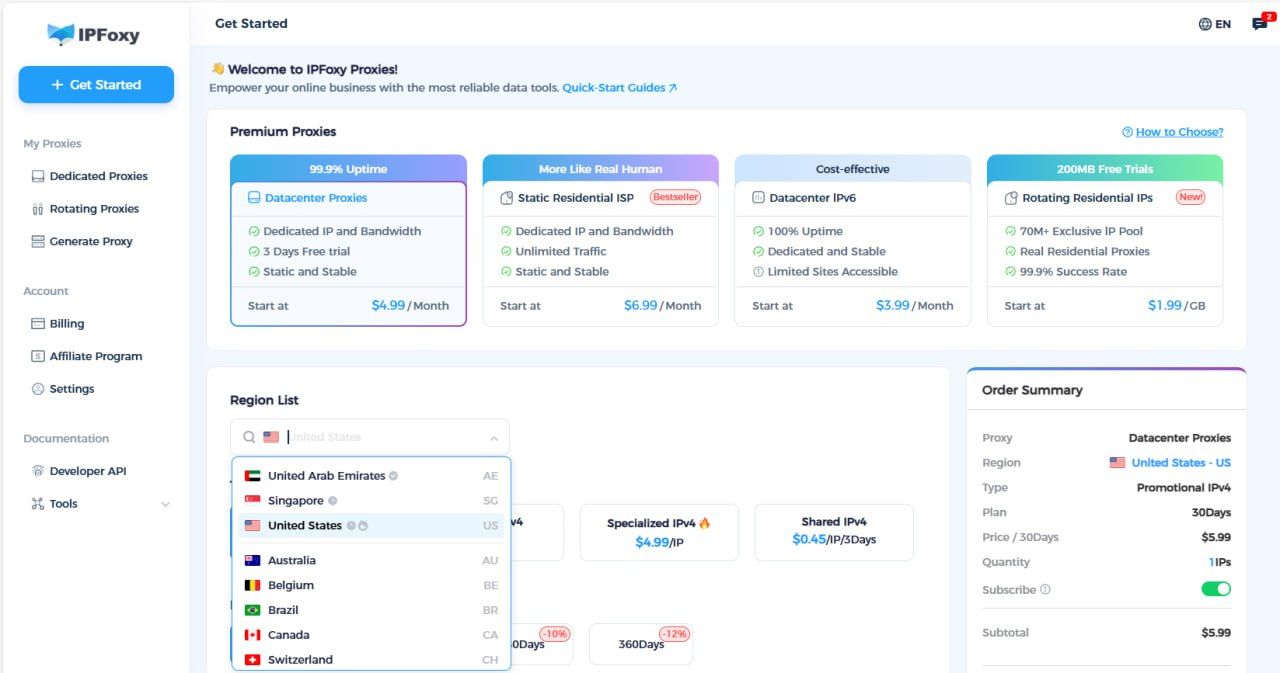
Choose a proxy provider that offers SOCKS5 support and has a high percentage of "Clean" IPs on the IPQS (IP Quality Score) scale. Avoid "Rotating" proxies for social media; you want a "Static" residential IP that remains the same for the duration of your session to mimic a stable home connection. IPFoxy could fullfill all these needs. IPFoxy is a global proxy service provider specializing in clean, high-quality proxy networks with strong stability and anonymity. Its worldwide coverage supports teams of all sizes across data collection, ad delivery and verification, cross-border eCommerce, and social media management.
Step 2: Configure the Antidetect Profile
When creating a new profile by MostLogin Antidetect Browser, ensure the "Timezone" and "WebRTC" settings are set to "Based on IP." If your proxy is in New York, but your system clock is set to London, the platform will immediately flag the discrepancy.
Step 3: Disable Hardware Leaks
In your browser settings, disable "Hardware Acceleration." This forces the browser to use software rendering, which is harder to uniquely fingerprint than your specific NVIDIA or AMD GPU driver version.
The Future of Digital Identity
The events of late 2025 X reveal demonstrate that we are moving toward an "Evidence-Based" web. Platforms are no longer content with self-reported data; they are leveraging the full depth of the networking stack to verify who is talking to whom.
As AI-driven influence operations become more prevalent, the tools used to hide your IP will only become more intrusive. For those who require privacy for legitimate reasons—such as investigative journalists, researchers in sensitive regions, or businesses conducting competitive intelligence—the "one-click VPN" era is over. The future belongs to those who understand the technical nuances of browser fingerprinting and network ASNs.
Author Information
John is a Senior Marketing Manager with over 10 years of experience in digital marketing management. She specializes in developing "stealth" infrastructure for large-scale market research on brand protection and anti-scraping countermeasures. Tina holds a Master's in Business Administration and is a frequent contributor to privacy-focused technical journals.