In 2026, platform risk control continued to be upgraded, and many people frequently encountered identity verification, account restrictions, or even bans on social media platforms such as Facebook and LinkedIn. This is due to the platform's improved ability to identify abnormal environments, and the risk is even greater for multi-account operators.
So how can Proxy001 help them achieve stable and secure multi-account operation?
Why Do Accounts Get Linked?
Platform systems detect account association through multi-dimensional fingerprint recognition, not just IP addresses.
Common factors include:
1. Network Layer
- Same IP address or IP range
- Data center IPs (easily flagged as proxy traffic)
- DNS leaks or WebRTC exposing real IP
2. Device Fingerprints
- Browser fingerprint (Canvas, WebGL, fonts, screen resolution, etc.)
- Operating system version and hardware details
- User-Agent consistency
3. Behavioral Patterns
- Highly consistent login schedules
- Repeated operational paths (e.g., mass liking or posting at the same time)
- Abnormal mouse movement or dwell time
4. Cross-Account Data Correlation
- Same email or phone number patterns
- Reused payment methods
- Shared cookies or cached data
Conclusion: IP is only the first layer. True detection is based on a combined “environment + behavior” analysis.
Why Residential Proxies Are Safer
Compared to traditional data center proxies, residential proxies offer clear advantages:
1. Real-World Origin
Residential IPs come from real home broadband connections assigned by ISPs, making them more trustworthy.
2. Harder to Flag
Platforms struggle to distinguish proxy traffic from normal users, reducing detection risk.
3. Geo-Accurate Identity
Support for precise city/country targeting helps match account “persona consistency.”
4. Dynamic Rotation
IP addresses can be rotated regularly to avoid long-term exposure risks.
Core Advantages of Proxy001
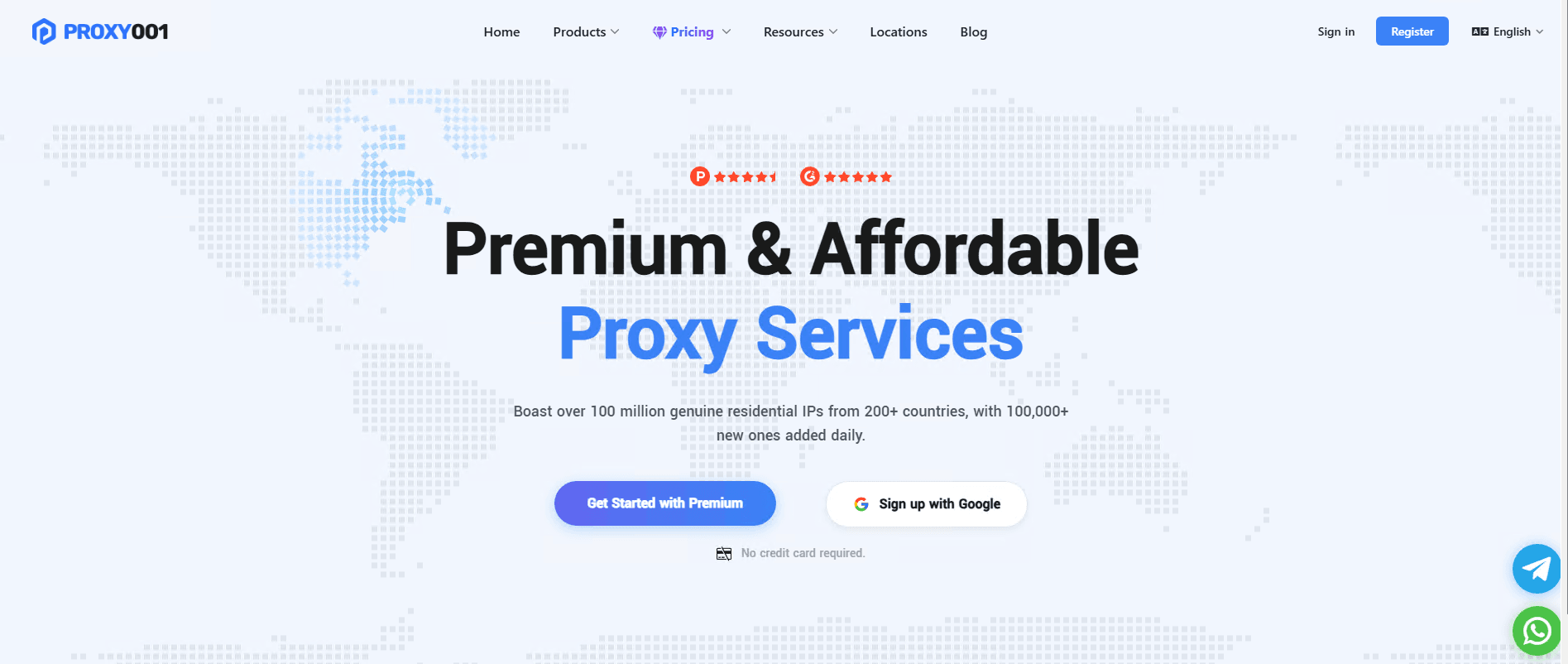
Among residential proxy providers, Proxy001 stands out due to its optimization of IP quality, anonymity, and controllability.
According to official data, the platform provides:
- 100M+ residential IPs
- Coverage across 200+ countries and cities
- 100,000+ daily IP updates
This “IP freshness” is critical because outdated or overused IPs are more likely to be flagged as risky.
1. High-Quality Clean IP Pool
Proxy001 IPs come from real residential ISPs.
- Low abuse and blacklist rates
- Clean historical reputation
- Suitable for e-commerce, social media, and advertising
Core benefit: Reduces initial risk detection.
2. High Anonymity
In anti-fraud systems, “appearing like a proxy” is more important than “using a proxy.”
Proxy001 improves anonymity through:
- HTTP(S) / SOCKS5 support
- DNS leak prevention
- Hidden proxy headers
- Reduced identifiable proxy traces
Value: Traffic behaves like a normal user, not a technical proxy node.
3. Flexible Session Control
Different scenarios require different IP strategies:
- Sticky sessions (for login and account warming)
- Automatic rotation (for scraping and bulk requests)
- Time-based or request-based switching
Benefit: Balance between stability and security.
4. High Success Rate
In real environments, IP usability matters more than quantity.
Proxy001 improves:
- Request success rates
- Lower CAPTCHA triggers
- Stable connectivity
This is especially important for:
- Cross-border e-commerce
- Social media operations
- High-risk platform environments
5. Easy Integration
Proxy001 integrates with mainstream automation tools and fingerprint browsers:
- Standard API access
- Multi-language support (Python, Node.js, etc.)
- Compatible with fingerprint browsers (e.g., MostLogin)
- Suitable for team-based scaling
Proxy001 Pricing Models
Proxy001 offers multiple billing methods tailored to different use cases.
1. Dynamic Residential Proxy (Traffic-Based)
- ~$0.55 / GB
- Dynamic residential IPs
- Sticky sessions (1–180 minutes) or rotation
Best for:
- Web scraping
- Ad verification
- Market research
- High-frequency requests
2. Static Residential Proxy (Per IP)
- $5 / IP / 30 days
- Fixed residential IP
- Stable long-term connection
Best for:
- Social media account management
- E-commerce store operations
- Ad account management
3. Unlimited Residential Proxy (Bandwidth-Based)
- Billing based on bandwidth/port usage
- Large-scale dynamic IP usage
Best for:
- Large-scale data extraction
- Automated systems
- Enterprise deployments
Proxy001 Integration with MostLogin
1: Register and Log In
Visit the Proxy001 official website to register.
Tip: New users may contact customer support (service@proxy001.com) to receive a 500MB trial quota.
2: Obtain Proxy Details
Go to User Management → Residential Proxies → Get Proxy
Configuration parameters:
- Username/password: auto-assigned by system
- Country selection: specify or random
- City selection: optional targeting
- Port: auto-assigned
- Session mode:
- Sticky IP (1–180 min configurable)
- Rotating IP (changes per request)
3: Proxy Format Output
You will receive a standard format:
host:port:username:password
Store this information carefully. It will be used in MostLogin configuration fields.
Common Mistakes to Avoid
High-risk behaviors include:
- Sharing one IP across multiple accounts
- Using low-quality data center proxies
- No browser environment isolation
- Frequent abnormal IP switching
- Large actions immediately after login
- Same device fingerprint used for bulk registration
- Ignoring timezone/language/location consistency
Core principle: Act like a real human user, not a bot.
Conclusion
In 2026’s anti-fraud ecosystem, account security has evolved from a single-layer problem into a system-level challenge.
To achieve real protection, you must combine:
- High-quality residential proxies ( Proxy001)
- Fingerprint browser isolation
- Realistic user behavior patterns
- Long-term stable operational strategies
Proxy001 handles network identity, MostLogin handles device identity, and your behavior determines the final outcome.
Only when all three work together can you achieve:
- Stable operations
- Multi-account scalability
- Long-term account survival
If you are building a multi-account system, start with small-scale testing and gradually optimize your setup. In anti-fraud environments, success is determined not by speed, but by detail and patience.