Conducting cross-regional marketing online is a common practice. Whether you are engaged in cross-border e-commerce, overseas social media operations, or business negotiations, you almost always have to operate across national and linguistic boundaries. Recently, many marketers have found that when the time zone, language, and IP of an account are inconsistent, it is very easy to trigger risk control mechanisms, resulting in account restrictions or bans.
What is the logic behind such risk control mechanisms? Why does a mismatch between time zone and language trigger platform risk control for accounts? Today, we will provide you with an in-depth answer to these related questions!
1. What are the directions of platform risk control?
Platform risk control is not actually targeted at cross-border users, but at users with abnormal behavioral patterns. For platforms, account security, ecological stability, and compliant operation are the top priorities. Many official platforms explicitly specify prohibited operations:
Account theft, credential stuffing attempts, and taking over others' accounts are prohibited
False registration, bulk account cultivation, and operating multiple accounts to harass other users are prohibited
Fraud, fake traffic generation, and gray and black industry activities are prohibited
Actions that interfere with the experience of real users and the interests of advertisers are prohibited
Some mechanisms are designed to prevent these situations, so risk control and bans are imposed on users whose operations differ from those of normal users.
2. Are time zone and language settings important?
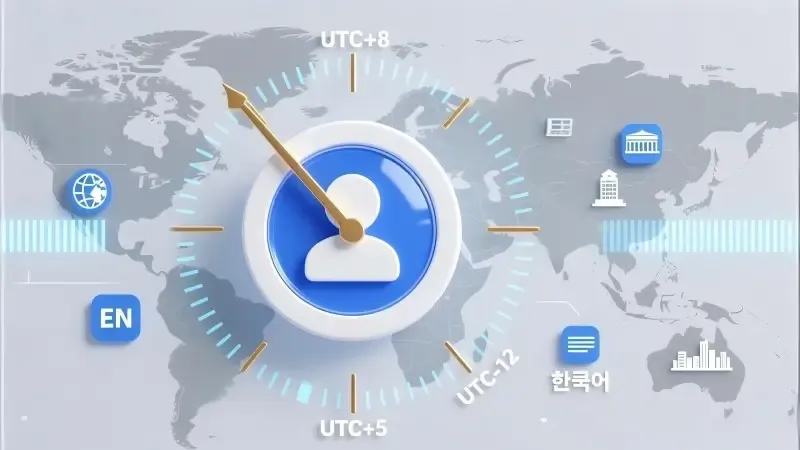
Almost all modern platforms build dynamic user profiles for each account, covering multiple dimensions. These include the login IP and its geographic location, system time zone settings, device language and system language, platform interface language preferences, active time distribution, behavioral rhythm, and operating habits.
Time zone and language are not isolated parameters, but two highly correlated elements in a user profile. Under normal circumstances, the time zone of a user's location should match the device time zone, and the language of the user's location should match the system/platform language settings.
If these parameters do not align well, the account is highly likely to be flagged by the system. Conversely, proper alignment makes it far easier for the system to identify the account as a normal user account.
3. How do platforms determine time zone and language mismatches?
1. Inconsistency with the distribution pattern of real users
Based on the massive data collected by platforms, the vast majority of real users' language choices are highly consistent with their geographic locations, though low-probability combinations are not entirely ruled out. For example, an Asian IP with an English system and American active hours, or a European IP with a Chinese system and East Asian active rhythms. Such combinations account for a relatively small proportion of the overall sample, but are not impossible.
When an account's behavioral characteristics fall within the low-probability range for an extended period, the system will increase supervision and vigilance over the account.
2. High overlap with common abnormal scenarios
Platforms do not judge risks subjectively, but based on historical samples. Among a large number of accounts penalized for time zone and language issues, the common abnormal account characteristics include:
Bulk registered accounts using the default English system
Inconsistency between the actual operator and the account's target market
Logging in via proxies, cloud servers, or remote environments
Concentrated operating hours that do not conform to the local circadian rhythm
Technically, these behaviors typically involve a clear disconnect between time zone, language, and IP. Therefore, even if your account is used for legitimate purposes, the system may still flag or ban it if its behavioral characteristics are highly similar to these historical risk samples.
3. Elevated risk assessment of account theft or sharing
From a security perspective, abnormal changes in time zone and language are often typical signals of account theft, resale, or multi-user sharing. Examples include logins from different time zones within a short period, a sudden switch to a completely different language in the login environment, and significant changes in operating habits. Platforms need to protect accounts immediately, triggering verification, restrictions, and freezes.
4. How to solve time zone and language issues?
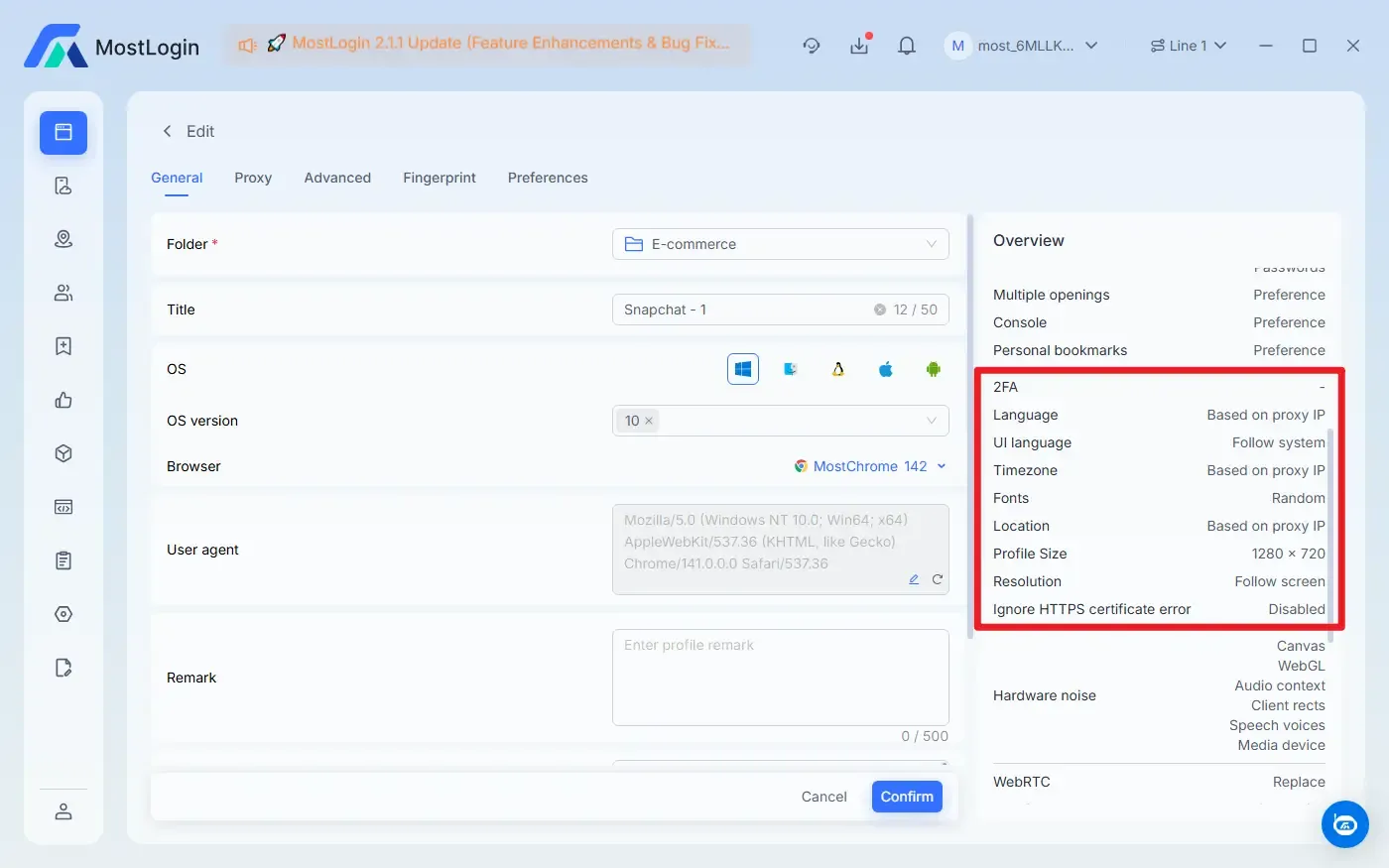
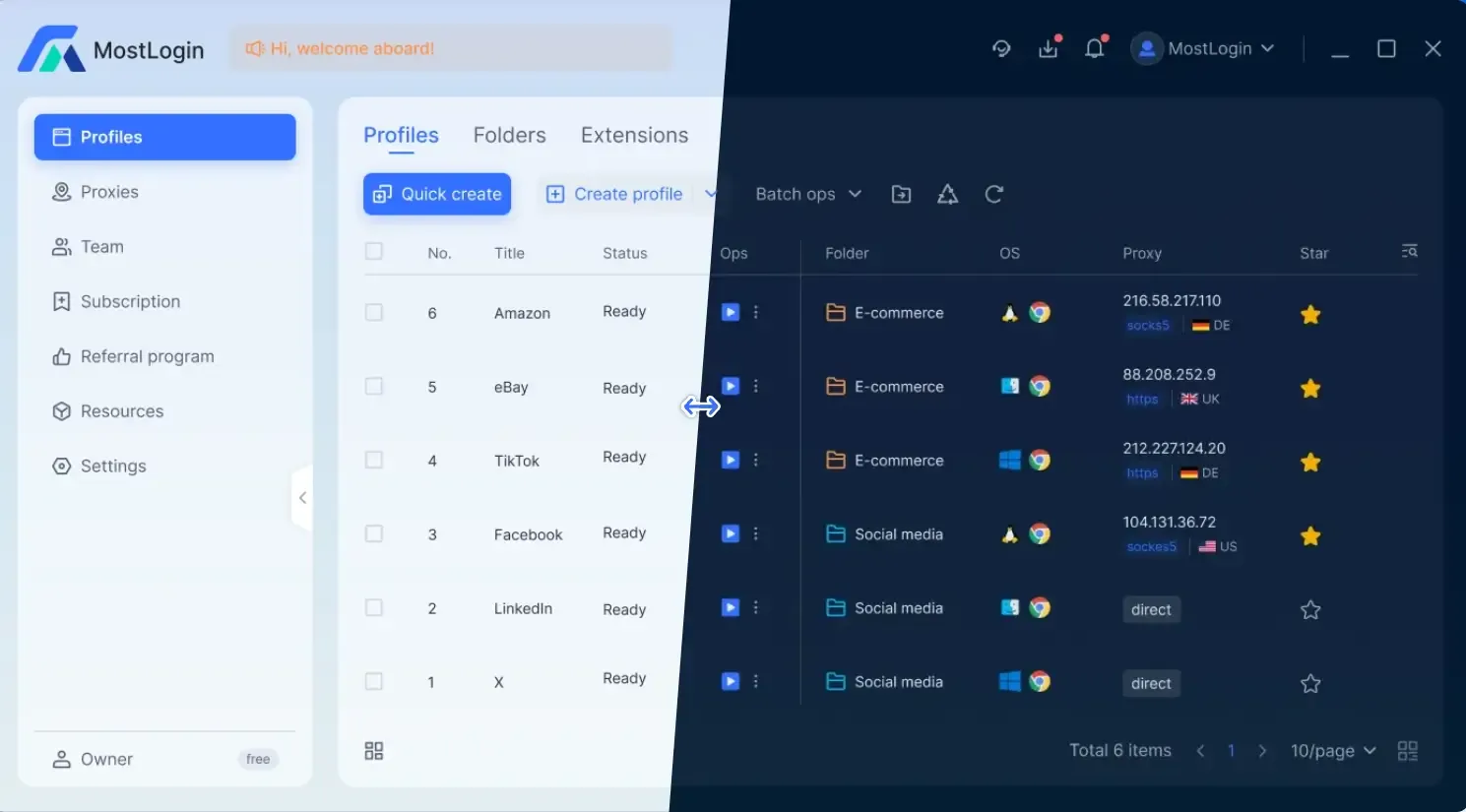
If you need to maintain multiple accounts in different regions, or manage accounts in a specific region smoothly, it is best to use professional anti-detection browsers for operations. For example, MostLogin Anti-Detection Browser can help you independently set the window language and time zone information.
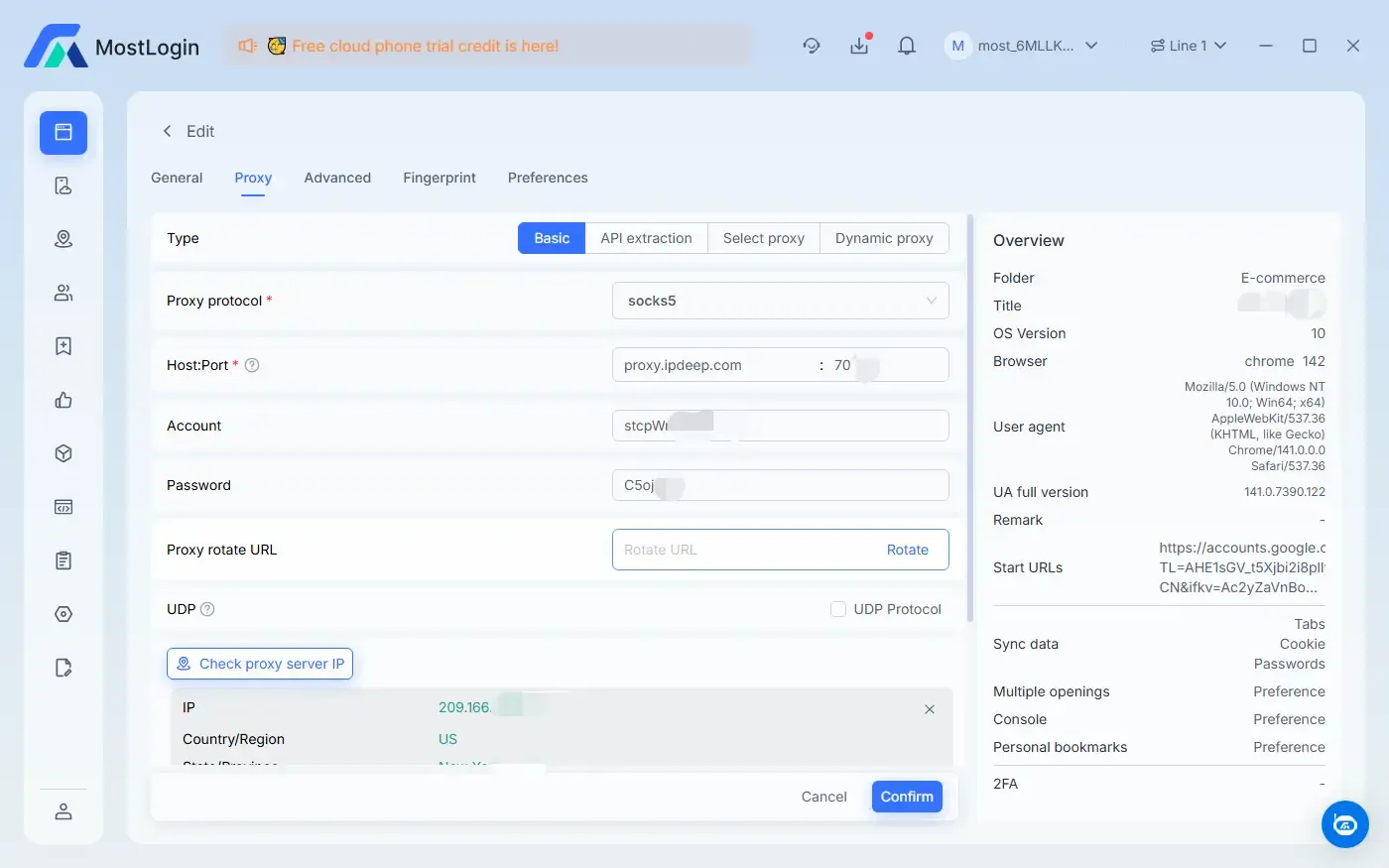
In addition to language and time zone issues, to enhance account security, you also need to consider proxy IP issues. A stable IP that matches the time zone and language is crucial. As a key component of current risk control systems, MostLogin Anti-Detection Browser supports proxy import and quick configuration.
From the perspective of the overall risk control mechanism, MostLogin Anti-Detection Browser can provide comprehensive protection for account security. The software supports multi-account import, as well as batch configuration and copying of browser fingerprint-related content. If you also have multiple accounts to manage and protect, you are welcome to try it out!
5. How to reduce the risk of control triggered by time zone and language mismatches?
On the premise of compliance and security, you need to optimize the account environment in the following aspects:
Maintain logical consistency: Ensure the device time zone, system language, and platform language are reasonably matched as much as possible.
Avoid frequent and drastic environment changes: Refrain from repeated changes to IP, device, language, and time zone within a short period.
Make behaviors more similar to real users: Ensure active hours, operating rhythm, and content browsing methods conform to the habits of the target region.
Understand platform rules: Risk control is not targeted at individuals, but a preventive mechanism for overall risks.
Summary
Essentially, a mismatch between time zone and language is not a violation. However, if there is no consistency among IP, time zone, language, and behavioral rhythm, the system will pay close attention to your account and other information. For users engaged in cross-regional operations, the truly secure approach is to ensure that all account environment parameters are mutually matched, so as to maintain stability and credibility.
FAQ
Will an inconsistency between time zone and language definitely result in an account ban?
Not necessarily, but long-term use of low-probability combinations will significantly increase the attention from risk control systems.
Why do platforms attach so much importance to time zone and language?
Because they are important signals for judging whether an account is stolen, shared, or operated in bulk.
Can logging in via a proxy solve time zone issues?
No. A proxy only changes the location, while the device time zone and language will still reveal inconsistencies.
Which language and time zone should be used for cross-border operation accounts?
They should be consistent with the location of the account's target market as much as possible, rather than the operator's location.
What risks are associated with frequently switching language or time zone?
It is easy for the system to determine that the account is shared by multiple people or used in an abnormal login environment.
What core problem does an anti-detection browser solve in this scenario?
It can stabilize and isolate the language, time zone, and fingerprint environment of different accounts, avoiding conflicts between them.
MostLogin Anti-Detection Browser helps users solve frequent problems such as multi-account operation, environment isolation, and account risk control.
For operational questions, please refer to the Official Help Documentation