CPA marketing becomes operationally difficult when a team manages more than one platform, market, campaign, or account owner. The issue is not simply opening several browser windows. The real challenge is keeping every authorized account tied to a stable environment, a clear business purpose, and a traceable operating process.
For example, a marketer might access a U.S. affiliate dashboard in the morning, review a UK campaign later in the day, then log into several social media accounts from the same default Chrome profile. If browser storage, cookies, IP locations, language settings, and login histories overlap, the team loses visibility into which environment belongs to which account.
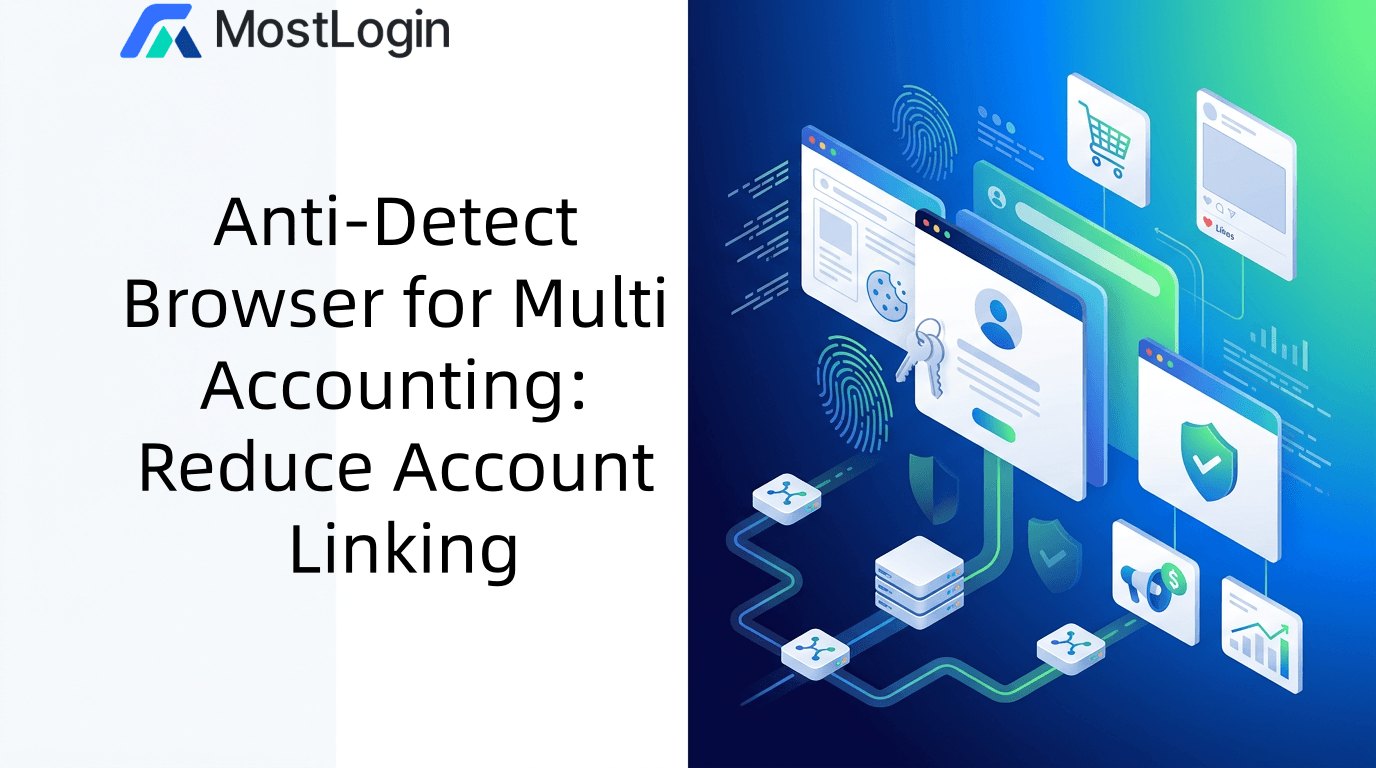
An anti-detect browser for CPA marketing can help structure this work. It creates separate browser profiles that keep cookies, local storage, proxy settings, browser preferences, and selected fingerprint attributes apart. It should not be treated as a way to bypass platform rules, evade enforcement, or guarantee that an account will never be reviewed. Its legitimate operational value is creating cleaner separation for authorized accounts, controlled regional testing, and organized team workflows.
Why a Standard Browser Creates Problems
Standard browsers can support multiple user profiles, but they often become inefficient when a CPA team needs proxy assignment, large-scale profile naming, collaborative access, account documentation, and repeatable setup rules.
Common problems include using one browser profile for unrelated affiliate, advertising, and social media accounts; sharing unstable proxies without clear documentation; deleting or mixing cookies during troubleshooting; and recreating environments when team members change.
A dedicated multi-account management browser helps teams create a one-profile-per-workflow structure. Instead of logging in and out repeatedly in one browser, an operator can open the environment assigned to a specific market, campaign, client, or account owner.
The goal is not to make every account appear artificially different. The goal is to make each legitimate working environment consistent, separate, and easier to audit.
How Platform Risk Signals Work
Many marketers focus only on IP addresses, but platforms usually evaluate a wider set of signals. Account reviews and security checks may be influenced by session history, network reputation, device consistency, login frequency, payment information, content quality, user behavior, and compliance with platform policies.
Key operational signals include IP location, browser fingerprint consistency, cookies and sessions, login behavior, proxy quality, and account ownership. A browser fingerprint can include characteristics such as operating system, browser version, screen resolution, language, time zone, fonts, Canvas, and WebGL behavior. Cookies store session and login information, while a User Agent communicates browser and operating-system details.
For long-term account management, stability matters more than constant changes. A profile that suddenly changes its network location, language, browser version, and device characteristics may appear less consistent than one that remains aligned with its ordinary business context.
Step-by-Step: Build a CPA Account Environment
The following workflow is designed for authorized affiliate marketers, cross-border e-commerce teams, and social media operators. It assumes that every account is legitimately owned or managed with explicit permission and that the team follows relevant platform policies.
Step 1: Audit Your Account Assets
Do not start by creating dozens of browser profiles. Start with an account inventory. Your central account sheet should include the account name and platform, business entity or campaign, market or operating region, login email and recovery owner, assigned browser profile name, proxy type and renewal date, primary operator, backup operator, access level, most recent login date, and notes on alerts or technical issues.
Instead of naming profiles “Account 1” and “Account 2,” define them by function. Examples include US-AffiliateNetwork-BrandA-Operations, UK-GoogleAds-CampaignB-Testing, US-TikTok-BrandA-Content, and DE-Marketplace-StoreC-Admin.
This structure makes account handovers safer and helps managers identify whether a problem involves an account, proxy, browser profile, or team process.
Step 2: Create a Separate Browser Profile
Create one dedicated browser profile for each clearly defined account workflow. In a CPA environment, that may mean one profile per affiliate account, advertiser workspace, regional campaign, or assigned client entity.
The profile should have a meaningful name, appropriate operating notes, and a designated owner. If several people are permitted to access the account, document that internally rather than allowing uncontrolled credential sharing.
In an affiliate marketing anti-detect browser workflow, profile isolation can help separate campaign operations, affiliate programs, and team responsibilities. The critical step is defining why each profile exists before launching it, rather than creating profiles without ownership or naming rules.
Step 3: Configure Fingerprint Settings Conservatively
Fingerprint settings should be internally consistent with the profile’s intended operating context. For example, a profile supporting a U.S.-based English-language business workflow should not routinely switch between unrelated language, timezone, and device combinations.
Keep one long-term account associated with one stable profile. Align the operating system, browser version, language, timezone, and proxy location where appropriate. Avoid unusual or conflicting parameter combinations, record material profile changes, and do not reset browser characteristics simply because an account has been inactive briefly.
Frequent fingerprint changes are often counterproductive. For legitimate operations, a stable environment is generally easier to manage, easier to hand over, and more consistent with a normal work pattern.
Step 4: Assign and Test a Proxy
Proxy management is one of the most important parts of an anti-detect browser CPA marketing setup. A proxy should be evaluated not only by location but also by uptime, speed, reputation, authentication method, and whether the team can clearly identify who uses it.
Assign a proxy according to the account’s legitimate business market or workflow. Avoid casually sharing the same proxy across unrelated clients, brands, or business entities. Keep the proxy stable for long-running accounts whenever possible, test the connection before logging into an important account, and document the provider, region, protocol, renewal date, and associated profile.
More proxies do not automatically mean better account operations. A small, well-documented proxy pool is usually more useful than a large collection of untracked connections.
Step 5: Import Accounts and Establish Session Stability
After a profile is ready, log in to the authorized account from its assigned environment. Do not immediately perform aggressive, repetitive, or high-volume actions.
- Launch the assigned profile and verify the proxy connection.
- Confirm that timezone, language, and other required settings match the intended workflow.
- Log in using authorized credentials and complete required security checks.
- Review notifications, permissions, account settings, and historic activity.
- Confirm that cookies and session data remain available after reopening the profile.
- Resume normal work gradually, such as reporting, content review, campaign setup, or approved landing-page testing.
In this context, “account warming” should not mean generating artificial engagement or misleading activity. It should mean allowing a new or newly transferred authorized account to return to ordinary, policy-compliant work at a reasonable pace.
Organize Profiles for Matrix Operations
Once a team manages more than 10 profiles, the main challenge becomes governance rather than browser access. The most practical structure groups profiles by business entity, channel, and market.
Business-entity groups may include Client A, Client B, an in-house brand, an affiliate project, or a partner program. Channel groups may include an affiliate platform, Google Ads, Meta, TikTok, an email platform, a marketplace, or an analytics tool. Market groups may include the United States, United Kingdom,
Germany, Southeast Asia, or other relevant regions.
A cross-border team might organize work into U.S. TikTok content operations, U.S. affiliate dashboards, UK advertising tests, and German localization review. Each group should have defined profiles, assigned proxies, approved operators, and documented objectives.
This structure also improves incident response. If an account requests verification or a session fails, the team can determine whether the issue is account-related, proxy-related, profile-related, or caused by an operator accessing the wrong environment.
Where MostLogin Fits
MostLogin can be used as one practical option for teams that need isolated browser profiles, proxy assignments, fingerprint management, centralized organization, and team collaboration. It is most useful when treated as part of a larger operating system that includes account inventories, proxy documentation, ownership rules, and compliance checks.
For growing teams, the relevant question is not which tool has the longest feature list. It is whether the tool supports the number of profiles, users, workflow controls, and budget constraints the operation actually has. Review the available MostLogin pricing plans based on required profile volume and collaboration needs, then start with a controlled pilot before migrating every account.
MostLogin also supports an AI-agent extension through MCP, or Model Context Protocol. In a multi-account management environment, an authorized AI agent can use MCP-connected MostLogin tools to help create or launch profiles, review proxy configurations, manage sessions or cookies, and perform selected browser-environment tasks through natural-language instructions.
This should remain an operational assistant layer rather than an autonomous decision-maker for sensitive actions. Payment details, account recovery, identity verification, policy appeals, access permissions, and major advertising changes should remain under accountable human review. MCP authentication tokens should be kept confidential and used only in trusted local environments.
Common CPA Marketing Mistakes
Sharing One Proxy Across Unrelated Accounts
Using one connection across accounts that belong to different clients, brands, regions, or business entities makes troubleshooting more difficult and can create unwanted operational overlap. Build proxy assignment rules before the number of accounts grows.
Changing Browser Settings Too Often
Constantly changing fingerprints, browser versions, locations, language settings, and User Agents is not a sustainable operating model. Stable accounts generally benefit from stable environments.
Logging Into Everything at Once
Opening dozens of accounts, performing identical actions, and switching rapidly between dashboards may create unusual patterns and makes human mistakes more likely. Divide work by operator, channel, or campaign priority.
Treating Cookies as Disposable
Repeatedly deleting cookies can cause unnecessary security checks and disrupt normal session continuity. Preserve session data within the dedicated profile unless there is a documented technical reason to reset it.
Keeping Account Data in Personal Chats
Proxy credentials in chat threads, recovery emails in private inboxes, and account ownership stored only in one employee’s memory create a serious handover risk. Centralize documentation and limit access based on role.
Assuming an Anti-Detect Browser Replaces Compliance
No browser tool can make unauthorized account creation, misleading advertising, policy violations, fake identities, or prohibited platform activity compliant. Use profile isolation to improve legitimate operations, not to bypass rules or enforcement.
Final Takeaway
For CPA marketing teams, the real value of an anti-detect browser is not the ability to open more accounts. It is the ability to turn a scattered collection of logins, proxies, cookies, operators, and campaigns into a controlled account-management system.
A strong process starts with clear account ownership, one stable profile per defined workflow, documented proxy assignments, consistent browser environments, gradual operational rhythms, and policy-compliant use. When those foundations are in place, an anti-detect browser becomes a practical infrastructure tool for scalable affiliate, cross-border, and social media operations rather than a substitute for sound compliance or responsible marketing.