In the Russian and CIS markets, search engines remain the primary way for users to access information, find products, and evaluate brands. If cross-border sellers and brands rely solely on Google or Meta platforms for promotion and optimization, they may miss a large amount of real traffic. This article reviews six commonly used search engines in Russia and analyzes their traffic characteristics and suitable business scenarios.
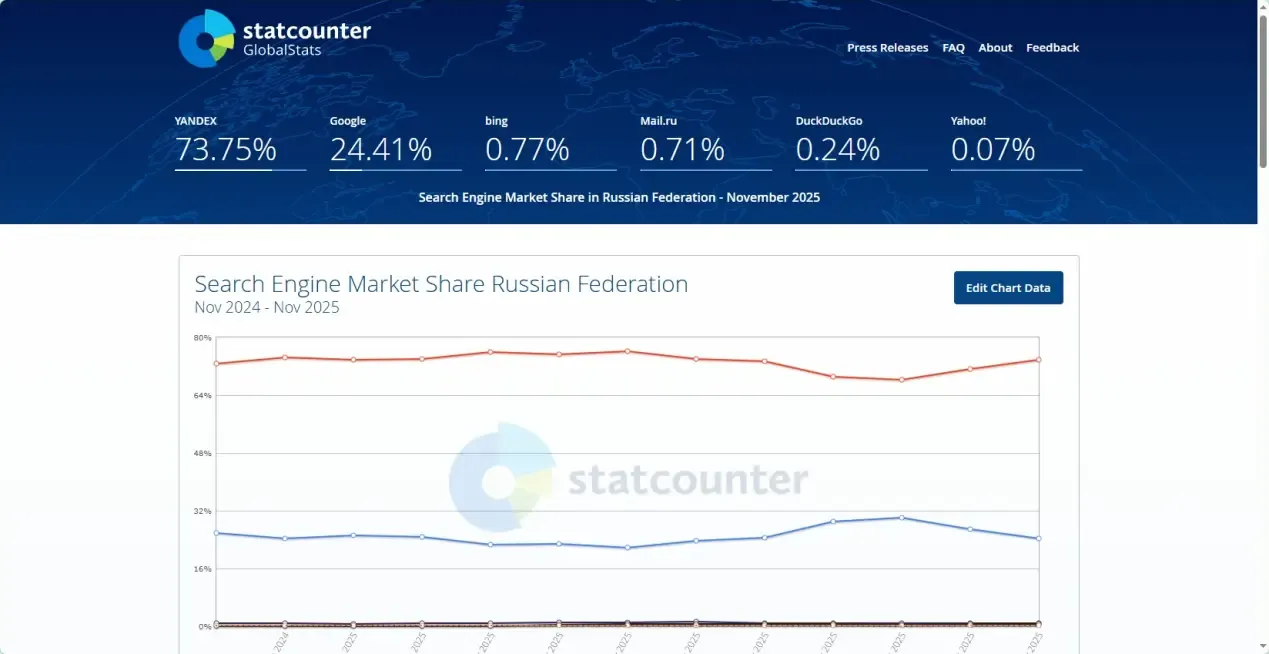
l Russian search engine market share, from Statcounter, data as of November 2025.
1. Yandex
When it comes to Russian search engines, Yandex always ranks first. It is the largest local search engine in Russia, consistently holding over 60% of the market share.

Advantages
Yandex handles Russian grammar, phrasing, and synonyms more accurately. It offers a complete ecosystem including search, maps, email, and cloud services. The Yandex.Direct advertising platform is well-developed, making it ideal for precise ad targeting. Most Russian users set Yandex as their default search engine.
Use Cases
Ideal for Russian SEO optimization to improve local search rankings; suitable for brand exposure and paid ad campaigns to acquire targeted traffic; particularly useful for early-stage Russian independent sites and cross-border e-commerce projects.
2.Google
Although Google's share in Russia is lower than Yandex, it still holds about 30% of the Russian search engine market.
Advantages
Google has broad international content coverage, making it ideal for cross-border sellers targeting multilingual markets. Professionals familiar with Google's SEO rules find it easier to optimize. Google Ads allows precise targeting for CIS countries and Russian-speaking users, providing an effective cross-region promotion channel.
Use Cases
Best suited for IT, software tools, and tech product promotion; also useful for cross-border e-commerce independent sites requiring multilingual content to attract international search traffic.
3.Bing
Bing has a smaller market share in Russia but still has usage among enterprise and professional users due to Microsoft's global presence.
Advantages
Bing integrates deeply with Microsoft’s office software and ecosystem, providing natural exposure across devices. Bing Ads supports precise targeting for specific countries, industries, or keywords. It performs steadily in professional and B2B searches.
Use Cases
Suitable for campaigns targeting enterprise or high-end users; ideal for products leveraging the Microsoft ecosystem like software services and productivity tools; also suitable for tech or professional service businesses to reach potential clients.
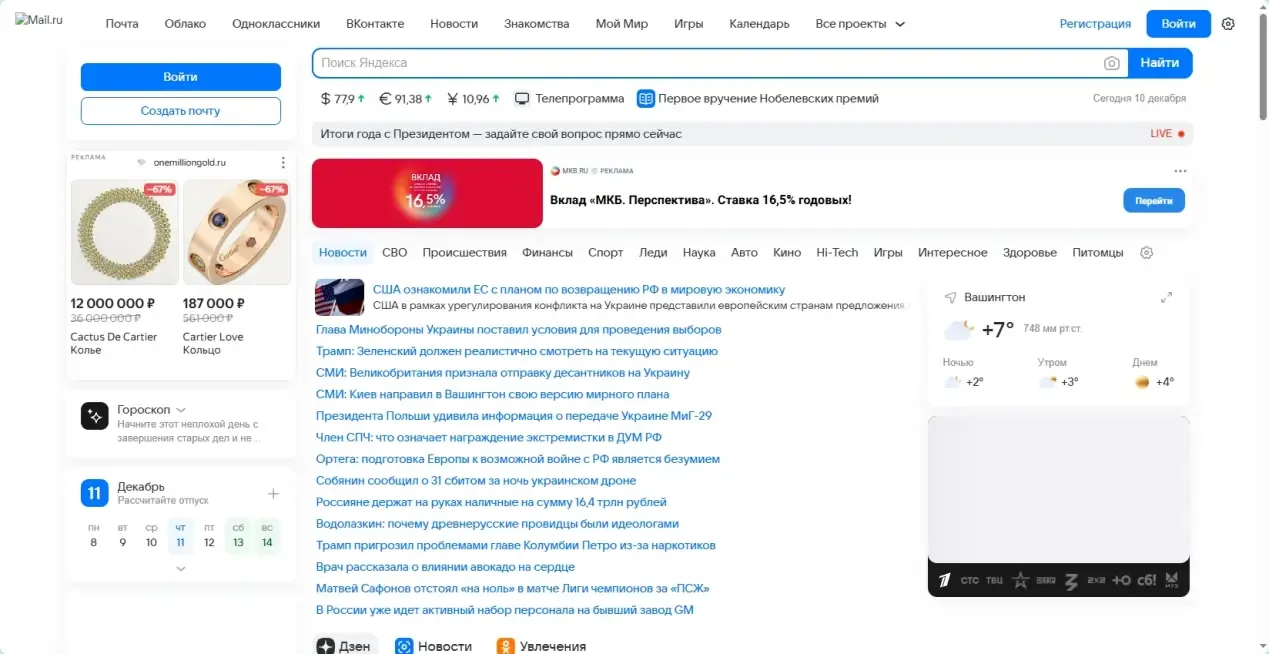
4.Mail.ru
Mail.ru is one of Russia's largest email providers and owns VK (formerly VKontakte), OdnoKlassniki, and other top social platforms, forming a massive traffic ecosystem.
Advantages
Many users log into their email daily, making the homepage search bar highly visible. Mail.ru is deeply linked with VK social platforms, so content or ads on VK can naturally boost Mail.ru search traffic. While the search logic is similar to Yandex, Mail.ru leverages strong social data to provide personalized, socially-oriented recommendations.
Use Cases
Suitable for businesses combining social media and e-commerce; ideal for early brand exposure, reaching Russian users, and supporting subsequent VK operations and search improvements.
5.DuckDuckGo
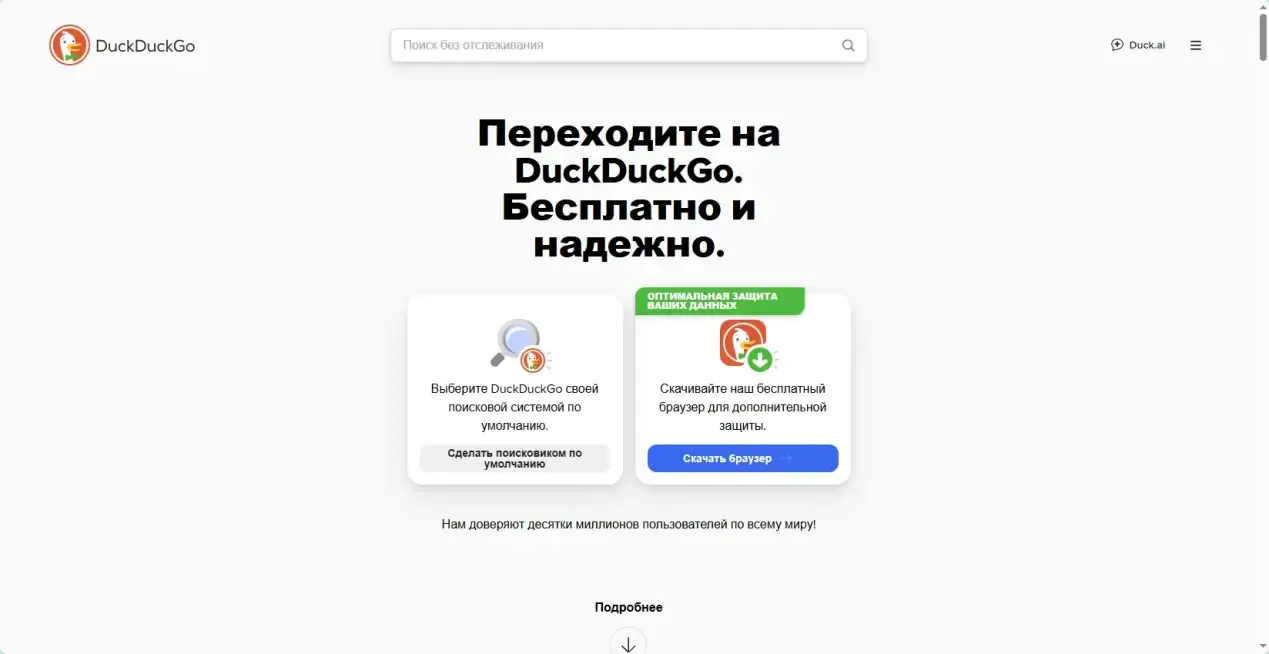
DuckDuckGo is known for not tracking users and protecting privacy, gaining attention among younger, tech-savvy Russian users. Though a newer player, it has established a unique position in the Russian search market.
Advantages
DuckDuckGo uses a non-tracking, non-personalized search model, making it a plus for businesses aiming to build a secure, transparent, and trustworthy brand image. It has strong growth potential and attracts new traffic.
Use Cases
Ideal for privacy-conscious users, promoting high-end tech products, cybersecurity tools, or professional services. It’s a valuable search channel for brands seeking differentiation in a competitive market.
6.Yahoo!
Yahoo! was one of the early leading internet portals and search engines. Its market share is now much smaller and not mainstream in Russia, but it still has a user base.
Advantages
As a long-standing international platform, Yahoo! integrates news, email, finance, and other services, offering wide coverage and strong user retention. It remains a valuable supplementary traffic source in Russia, and its ad system supports multi-channel brand promotion.
Use Cases
Suitable for promoting news and information products, and for projects or premium services aiming to increase brand awareness through multiple channels.
SEO Tips
In cross-border e-commerce and international promotion, SEO is key to acquiring organic traffic. MostLogin is a professional anti-detection browser that allows each browser environment to independently configure IP, time zone, language, resolution, and simulate multiple devices, effectively avoiding account association and search engine restrictions.
Benefits of Using MostLogin for SEO:
l Safer multi-account management
l Accurate regional keyword ranking tests
l Improved backlink building efficiency
l Cross-region promotion support
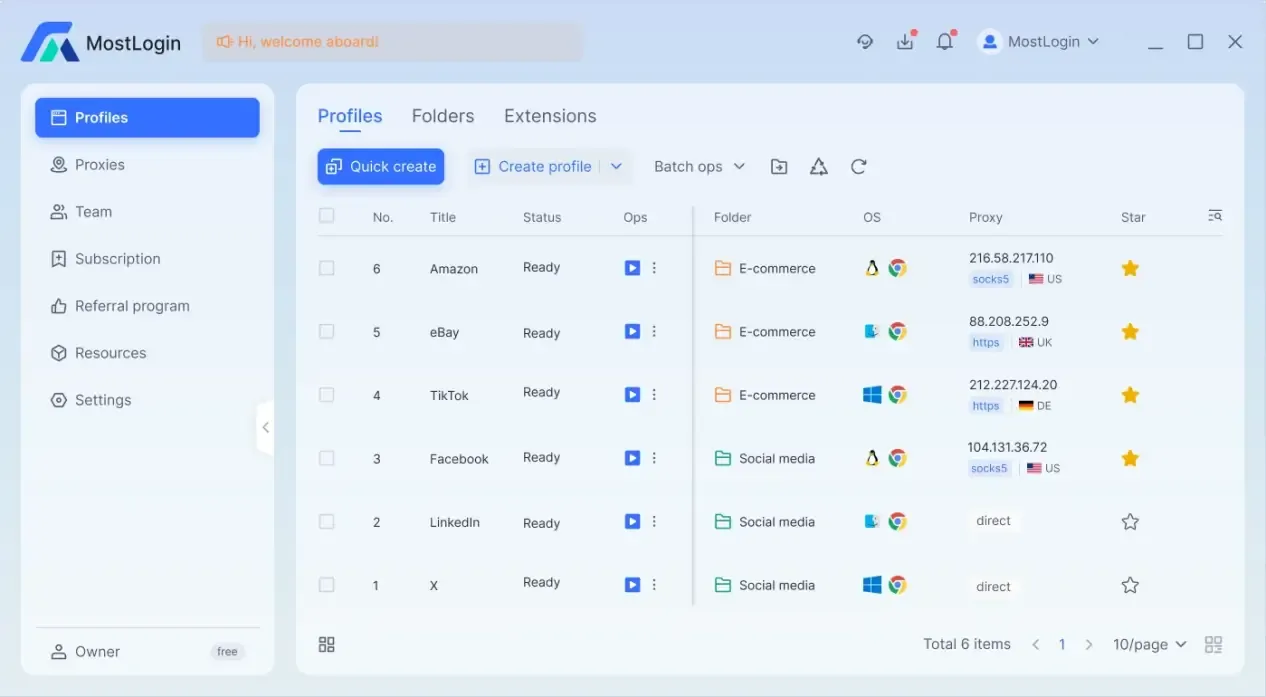
For cross-border sellers focusing on the Russian and CIS markets, MostLogin’s environment isolation and fingerprint protection significantly improve SEO performance on Yandex and Google, ensuring stable and efficient organic traffic growth.
The Russian search engine market has distinct local characteristics. Yandex dominates as a national-level search engine, but Google, Bing, Mail.ru, and other local and international search engines also play important roles. Cross-border sellers should not rely solely on Google or Meta platforms when entering the Russian and CIS markets.
FAQ
Why use Yandex instead of just Google?
Yandex has a deeper understanding of Russian grammar and local expressions, offers a complete ecosystem, and holds a larger market share. It is the preferred search engine for Russian users, enabling more precise audience targeting.
What are the SEO challenges in the Russian market?
Russian grammar is complex, with abundant keywords and synonyms. Yandex’s algorithm differs from Google, requiring content strategy and backlink adjustments to fit local user habits.
How to run effective advertising in the Russian market?
Prioritize Yandex.Direct and Google Ads, set precise geographic and language targeting for different audiences, and combine Mail.ru and VK social promotions to achieve search + social traffic synergy.
Best Anti-Detection Browser - MostLogin
MostLogin anti-detection browser helps users solve common issues like multi-account management, environment isolation, and account restrictions.
For operational questions, please refer to the official help documentation