Bypassing Deep Fingerprinting and Fraud Score Triggers via NiuProxy and MostLogin
Introduction: The Invisible Walls of Enterprise-Level Web Scraping and Advertising
For enterprise data infrastructure, large-scale web extraction, and high-budget affiliate media buying, the primary barrier to growth is no longer script logic or budget size. It is the invisible, highly sophisticated security perimeter deployed by global edge platforms like Cloudflare, Akamai, PerimeterX, and AWS WAF.
Gone are the days when web scrapers could simply cycle through basic datacenter IP addresses and clear HTTP headers to bypass rate limits. Modern cybersecurity firewalls rely on zero-trust device profiling and multi-layered anti-fraud heuristics. They don’t just look at what data your automated system is requesting; they analyze how your underlying OS kernel handles network packets and how your virtual hardware handles cryptographic handshakes.
When running hundreds of parallel data threads or scale-out ad campaigns, an infrastructure mismatch—such as a mismatch between your browser’s claimed user-agent and its raw network transmission characteristics—instantly flags your operations. The result is a surge in disruptive CAPTCHAs, persistent shadowbans, or immediate infrastructure blocks.
To maintain operational continuity, enterprise engineering teams must achieve absolute synchronization across two critical technical layers:
1. The Application & Fingerprint Layer: Controlled via specialized antidetect utilities like MostLogin, which decouple local hardware footprints and generate completely pristine browser telemetry.
2. The Backbone Network Layer: Powered by NiuProxy, an elite global proxy cloud engineered to deliver enterprise residential nodes characterized by zero IP contamination, low fraud scores, and customizable TCP/IP parameters.
This technical whitepaper deconstructs the advanced mechanics of fingerprint identification, unpacks the hidden vectors of network-level tracing, and outlines the integration of NiuProxy within the MostLogin ecosystem for enterprise resilience.
Section 1: Deep Tech Deconstruction: How Firewalls Profile Your Device and Network Stack
To bypass modern edge protection systems, you must first understand the advanced tracking methodologies used to differentiate between authentic enterprise users and automated automation matrices.
1.1 Hardware and Browser-Level Fingerprinting
When a browser hits an enterprise gatekeeper, the platform executes silent, non-blocking asynchronous scripts to audit the client-side environment. This profiling targets deep hardware and software abstractions:
· Canvas and WebGL Glitches: Firewalls command the browser to render a hidden 2D graphic or a complex 3D shape. Because every GPU chip architecture, driver version, and OS composition processes rasterization slightly differently, the resulting image output yields a distinct cryptographic hash. If twenty active profiles output identical hashes despite claiming to run on different machines, the network is flagged.
· AudioContext Architecture: Similar to visual rendering, scripts analyze how your system’s virtual audio stack processes mathematical sound waves. The minute variances in audio processing algorithms create an undeniable hardware fingerprint.
· API Inconsistencies: Security systems query deep browser properties like navigator.webdriver, permission state matrices, and font resource availability. Any discrepancy between your browser’s user-agent claim and its native API layout triggers a silent anomaly alert.
1.2 The Network Level: IP Fraud Scores and TCP/IP Fingerprinting
Even if your browser fingerprinting layer is perfectly randomized, a failure at the network transport layer will compromise your setup. Firewalls cross-reference connection requests against two advanced metrics:
A. The Fraud Score Matrix
Enterprise anti-fraud engines (such as IPQualityScore or MaxMind) assign a real-time probability score to every inbound IP address. This score is aggregated based on:
· IP Type Classification: Residential vs. Business vs. Cellular vs. Datacenter.
· Abuse History: Active participation in botnets, brute-force vectors, or spam distribution.
· Blacklist Co-location: Whether neighbor IPs within the same /24 subnet are currently executing aggressive automated behavior.
B. TCP/IP Fingerprinting (OS Passive Fingerprinting)
This is where standard proxy setups collapse. When your local server establishes a TCP handshake with a target server through a proxy, the target website examines the raw packets at the transport layer. It reads values like the Time to Live (TTL) and the Maximum Segment Size (MSS) inside the IP/TCP headers.
· The Mismatch: If you configure MostLogin to emulate a Mac running iOS, but your low-tier proxy routes data over a Linux-configured gateway without adjusting packet properties, the target firewall detects a fundamental conflict: App Layer = iOS; Transport Layer = Linux. This structural anomaly indicates an automated proxy setup, and the request is immediately blocked.
Section 2: NiuProxy—The Enterprise-Grade Infrastructure Advantage
NiuProxy was engineered specifically to solve the technical vulnerabilities that cause standard retail proxy networks to fail under heavy corporate workloads. By controlling its underlying routing fabric and vetting its global IP nodes, NiuProxy provides an institutional-strength network shield.
2.1 The NiuProxy Architectural Profile
NiuProxy operates an expansive, high-tier global backbone network delivering high availability, low latency, and deep configuration options.
2.2 Unlocking Enterprise Scalability and Stability
NiuProxy provides significant operational advantages for data engineering and global scale digital marketing departments:
· Prone to Zero-Trust Bypasses: Because NiuProxy’s residential nodes exhibit ultra-low fraud scores, your automation passes silently through Cloudflare Turnstile or Akamai challenges without encountering loops of CAPTCHAs.
· True Mass Concurrency: The NiuProxy network architecture handles tens of thousands of concurrent connections smoothly. Whether your deployment involves high-thread data mining or massive parallel ad accounts, the infrastructure scales dynamically without throttling bandwidth or dropping connections.
· Persistent Session Control: For applications requiring persistent data journeys—such as navigating complex, multi-page checkout checkouts or executing extended account updates—NiuProxy provides stable, custom-tailored sticky sessions that keep the exact same IP node active for up to 120 minutes.
Section 3: High-Yield Deployments: MostLogin + NiuProxy Synergies
Integrating NiuProxy’s advanced network layer with MostLogin’s secure local environment sandbox creates a robust solution for demanding corporate web workflows.
3.1 Large-Scale Corporate Data Harvesting and Pricing Intelligence
E-commerce giants, flight aggregators, and enterprise-grade data platforms utilize heavily weaponized anti-scraping systems. They can detect and neutralize simple automation setups within minutes.
· The Synergy: MostLogin virtualizes distinct, unlinked browser environments, ensuring that no cookies or localized storage metrics cross-contaminate your scraping threads. Simultaneously, NiuProxy routes those requests through a rotating stream of clean residential IPs.
· The Security Impact: Because NiuProxy matches network packet parameters with MostLogin’s hardware profiling, the combined fingerprint appears entirely natural. Your scripts can harvest vast quantities of data continuously without encountering blocks.
3.2 High-Budget Affiliate Marketing and Paid Media Expansion
For high-volume media buyers operating premium advertising accounts (Google Ads, Meta Business Manager, TikTok Ads), account suspension can stop revenue instantly. Platforms monitor these accounts closely for any signs of multi-profile management.
· The Synergy: By binding a dedicated, clean, low-fraud-score NiuProxy ISP node to an isolated MostLogin profile, your media buyers can safely scale operations. The ad platform sees each profile as an authentic consumer account operating from a dedicated home network, preventing catastrophic account chain-bans and ensuring uninterrupted ad delivery.
Section 4: Enterprise Integration Guide: Configuring NiuProxy inside MostLogin
Follow this technical deployment map to configure NiuProxy within your MostLogin enterprise client interface:
Step 1: Provision Clean Nodes via the NiuProxy Console
1. Access your corporate dashboard on the NiuProxy dashboard.
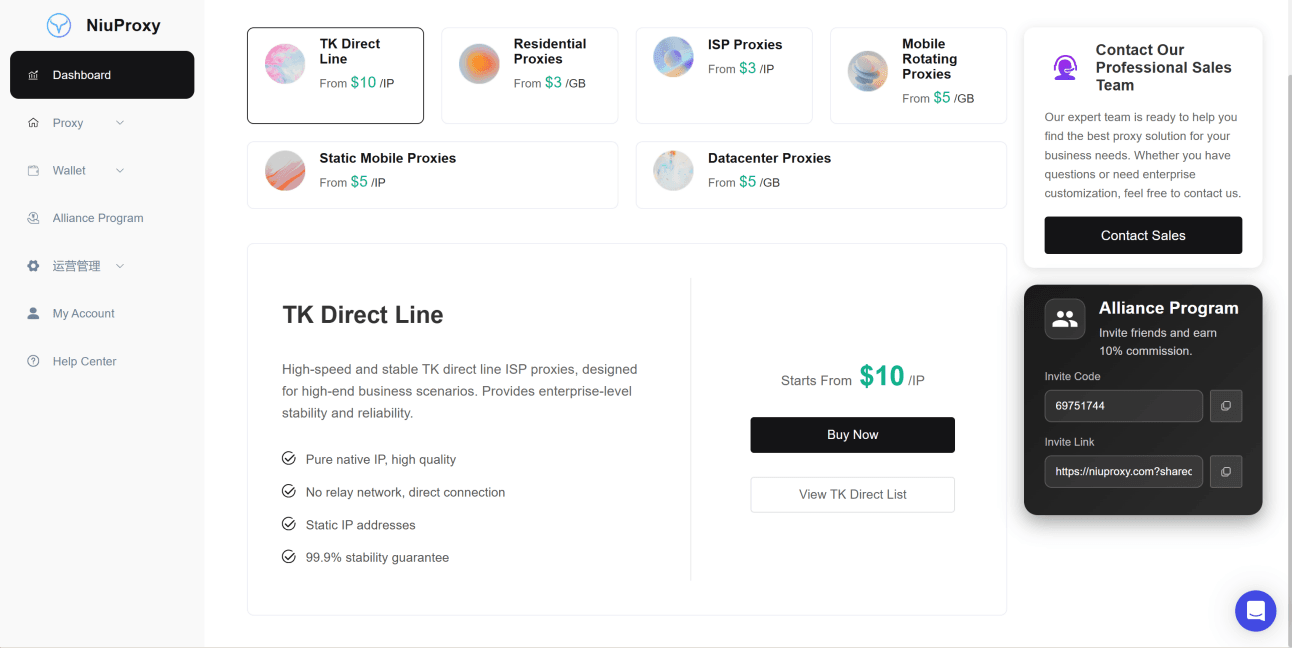
2. Select your required deployment architecture: Rotating Residential Proxy for high-volume scraping or Static ISP Proxy for persistent advertising account structures.
3. Utilize the advanced filtering criteria to isolate nodes matching your precise target demographic (Country, Region, City, and ASN profile).
4. Export your secure connection strings containing host, port, sub-user credentials, or secure access tokens.
Step 2: Establish an Enterprise Profile in MostLogin
1. Fire up your MostLogin desktop environment.
2. Click Create Profile to access the granular device configuration module.
3. Define the core user-agent parameters, operating system kernel (match this to your intended NiuProxy packet configuration), and randomize the Canvas/WebGL noise matrix.
Step 3: Embed the NiuProxy Transport Layer
1. Locate the Proxy Configuration section within the active MostLogin setup panel.
2. Set the protocol dropdown to SOCKS5 or HTTP based on your specific routing needs.
3. Input the destination address and network port provided by NiuProxy.
4. Input your access credentials (Username and Password) for secure authentication.
Step 4: Validate Network and Fingerprint Consistency
1. Execute the built-in Check Proxy connection audit within MostLogin.
2. Confirm the successful connection notice, noting that the resolved IP address, country, and time zone align correctly with your profile target.
3. Verify that the network latency metric falls within acceptable parameters for your enterprise workflow.
4. Click Save to lock down the profile.
Step 5: Operational Deployment
1. Click Launch on your MostLogin profile screen to initialize the clean browser thread.
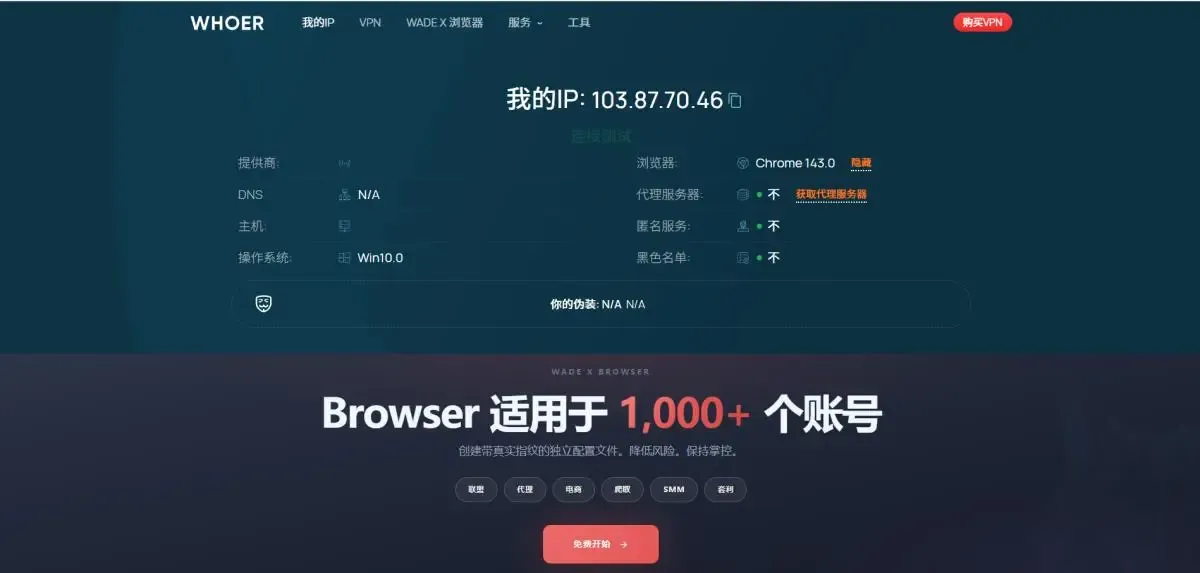
2. Navigate to an independent profiling destination (e.g., whoer.net or ipqualityscore.com) to verify your live footprint.
3. Confirm that your Fraud Score shows as negligible and that your hardware components align with your network origin. Your enterprise system is now secure and ready to scale.
Conclusion: Securing Your Enterprise Edge
In an digital ecosystem governed by aggressive, automated security architectures, structural vulnerabilities in your technology stack are costly liabilities. Relying on unvetted, retail-grade proxy networks or running misaligned network packets can lead to compromised workflows, lost data access, and interrupted operations.
Deploying the combined capabilities of MostLogin and NiuProxy provides the infrastructure needed to navigate these challenges. This architecture ensures your browser fingerprinting and transport layer parameters remain completely aligned, allowing your teams to bypass complex digital firewalls effortlessly.
Protect your data pipelines, secure your advertising budgets, and eliminate scaling limits with a network infrastructure built for enterprise performance.
Ready to optimize your enterprise network stack and eliminate infrastructure blocks? Visit the official NiuProxy Pricing Center to consult with an infrastructure specialist, configure your high-concurrency package, and secure your operations today!