In daily internet use, many people think that logging out of an account is equivalent to clearing their identity, and the platform will no longer be able to identify who they are. However, for today's social platforms, e-commerce websites, as well as advertising delivery and content recommendation systems, users may still be identified and associated by the system even after logging out.
So the question arises, why can we still not avoid being detected by the platform after logging out of our accounts? Today we will give you an in-depth explanation of this issue.

1. Logging Out Only Disconnects Identity
First of all, we need to know that logging out of an account does not mean clearing identity information, but only disconnecting the direct binding between the account and the device. An account itself is a form of identification, such as a username, email address, phone number, etc. When you click to log out, the platform will indeed terminate the current session and no longer directly attribute your operations to a specific account.
But the problem is that an account is only one of the ways a platform identifies users, not the only one. Beyond the account system, platforms will also use a large amount of implicit information to determine whether multiple accounts are controlled by the same person.
2. Device Fingerprint Enables More Stable Identification Than Accounts
Even without logging into an account, the device you use will constantly reveal information to the website, and the combination of this information forms what is known as a device fingerprint. Common device fingerprint information includes:
Operating system type and version
Browser type, version and kernel
Canvas, screen resolution and color depth
Font list, language settings and time zone
WebGL, AudioContext and other rendering features
Number of hardware concurrencies and memory parameters (within the allowed range)
A single piece of information may not be unique, but when dozens of parameters are combined and analyzed, the device identification accuracy will be greatly improved. Even if we log out of the account, the platform can still determine that it is the same device or a highly similar device as long as the device and environment have not changed significantly.
3. IP and Network Environment Are Not Complete Shields
Many users think that as long as the network is fine after changing accounts or logging out, but the network environment itself is also an important dimension for identification. Platforms usually analyze the following information:
IP address region and ISP
Whether it is a residential network, data center or proxy node
Historical usage behavior of the IP
Matching relationship between IP and device fingerprint
Even if the IP is dynamic, the system can still establish an association model as long as the change law conforms to the characteristics of normal users. In abnormal scenarios (such as frequent account switching and a large number of operations in a short time), the IP will instead become a risk amplifier.
4. Behavioral Characteristics Are Also Important
In addition to devices and networks, behavioral pattern recognition has become a very core part of risk control systems in recent years. Issues that platforms pay attention to include whether the operation rhythm is stable (click, slide, input speed), whether the browsing path conforms to real user habits, whether there are repetitive and automated characteristics, and whether highly similar operation sequences appear between different accounts.
Such behavioral data is usually accumulated over the long term and analyzed dynamically. Even if you log out of the account and log in again, the system can still determine that it is the same type of user or even the same operator as long as the behavioral pattern is highly consistent.
5. Cookies and Local Storage
Many people will clear Cookies after logging out, thinking that this will completely erase their traces. But in fact, the local storage used by modern websites is far more than just Cookies, and also includes LocalStorage, SessionStorage, IndexedDB, Service Worker cache and so on.
Even if some data is cleared, you may still be re-identified if the environment is not completely rebuilt. Moreover, under compliance premises, some information does not rely on traditional Cookies.
6. How to Avoid Account Detection?
In fact, most core platform risk control systems at present target browser fingerprints. The device fingerprint, IP, behavioral characteristics, Cookies and local storage we mentioned above are also a form of fingerprints, and this part is the most important overall.
We can use a professional fingerprint browser to modify/randomly obfuscate these fingerprints. For example, the MostLogin Fingerprint Browser, we can use it to isolate and obfuscate the browser fingerprint environment of our multiple accounts, which can effectively avoid detection.
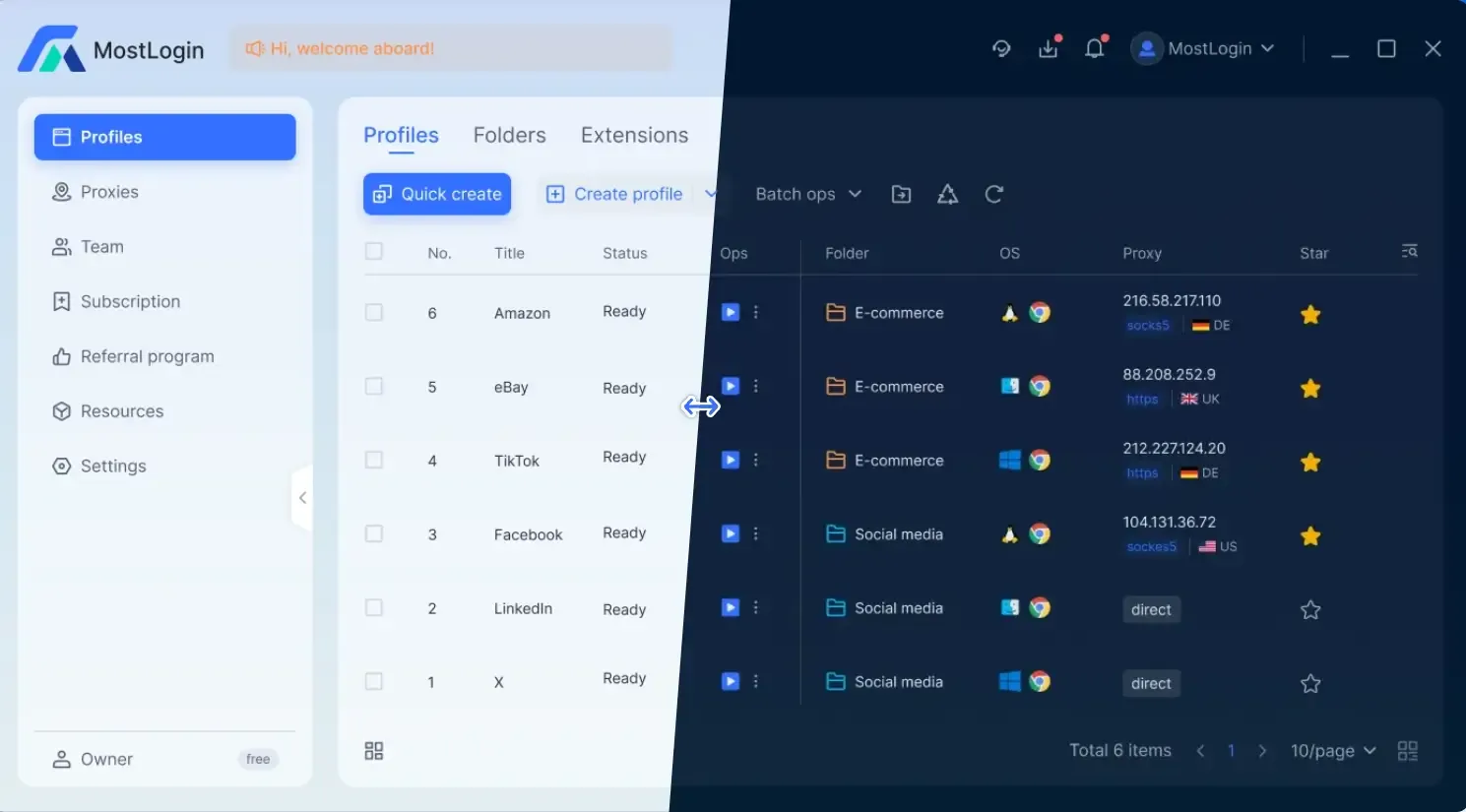
For preventing detection, using the MostLogin Fingerprint Browser can almost achieve effective protection completely. In addition, we can manually set up independent IP/allocate IP shortcut operations in it, allowing us to maintain and manage multiple accounts in batches at the same time.
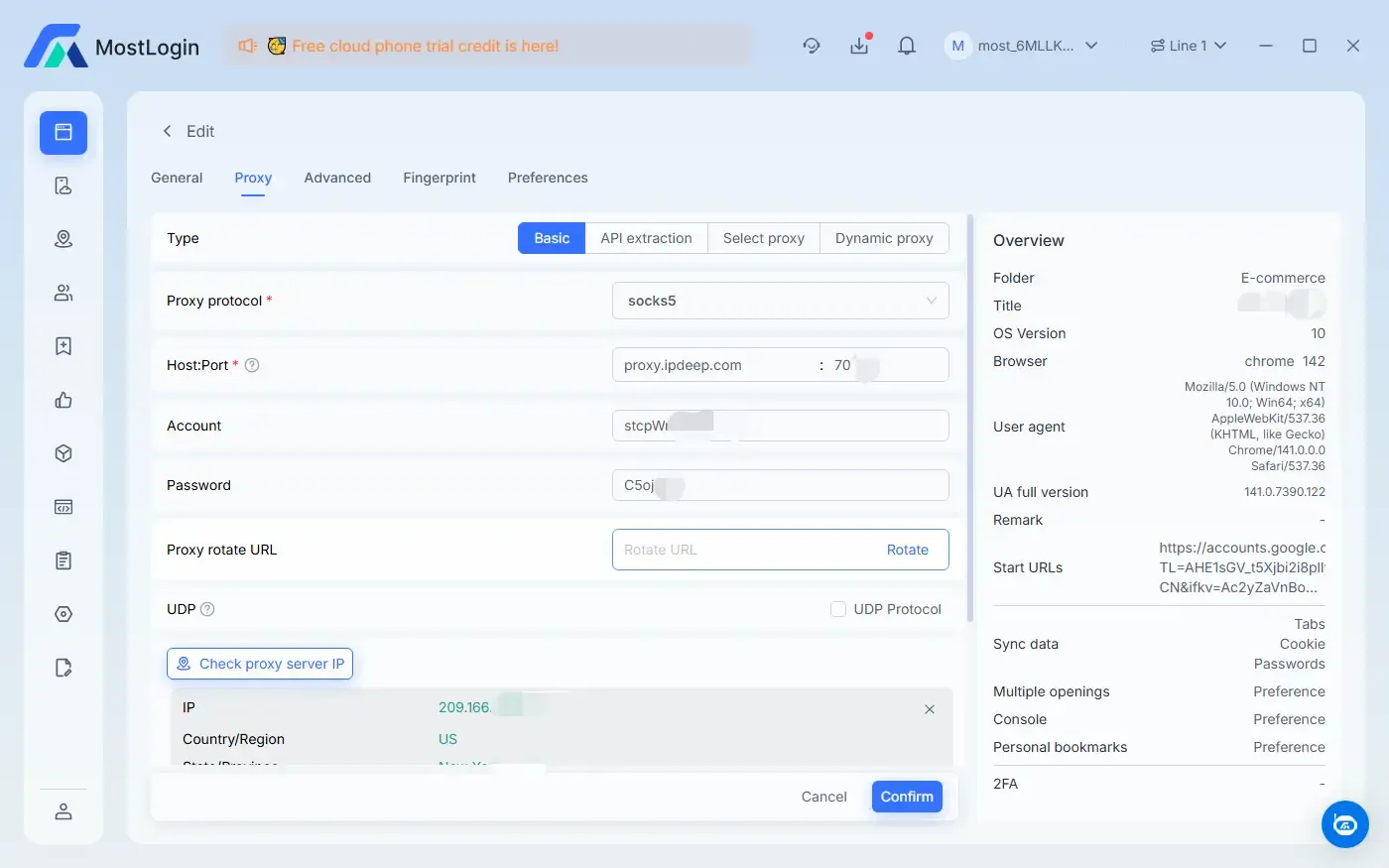
At present, the MostLogin Fingerprint Browser has a "Forerunner Program". Fingerprint browser functions are available according to the current plan, while the cloud phone service is offered separately. Personal users and teams are welcome to experience and use it!
Summary
Overall, logging out of an account only cuts off the binding relationship at the account level, and cannot truly clear your identity characteristics on the platform. In the current platform risk control system, device fingerprints, network environment, behavioral patterns and local storage information are all more important. Therefore, we highly recommend using the MostLogin Fingerprint Browser to help us carry out systematic isolation and management from the overall usage environment, not just at the account level.
FAQs
Can the platform still identify me after I log out of my account?
Yes, the platform can still identify users through device and environmental characteristics.
Is logging out and clearing Cookies useful?
The effect is limited, and it cannot solve the identification problem of device fingerprints and behavioral characteristics.
Why is device fingerprint more important than an account?
Because device fingerprints are stable for a long time and are more easily used for continuous identification of the same operator.
Can I still be detected after changing my IP?
It is possible, the platform will make a comprehensive judgment by combining IP with device fingerprint and behavior.
Will the platform really record behavioral patterns?
Yes, operation rhythm and usage habits are important reference dimensions for risk control.
What is the core idea to avoid account detection?
Carry out environmental isolation and optimization from the three aspects of devices, networks and behaviors at the same time.
The MostLogin anti-detection browser tool helps users solve high-frequency problems such as multi-account operation, environmental isolation and account risk control.
For operation questions, please refer to the official help documentation